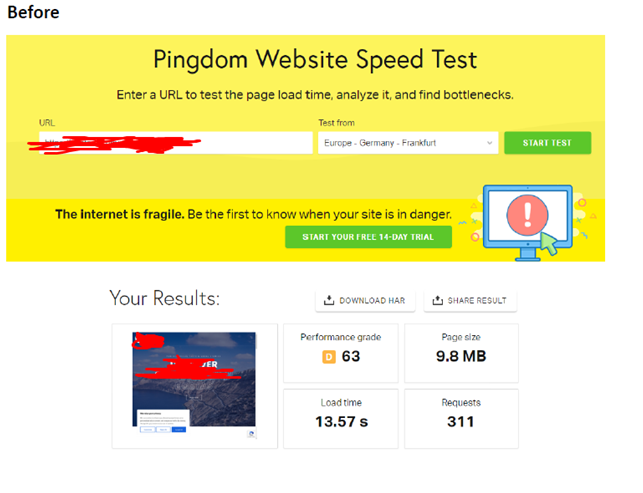
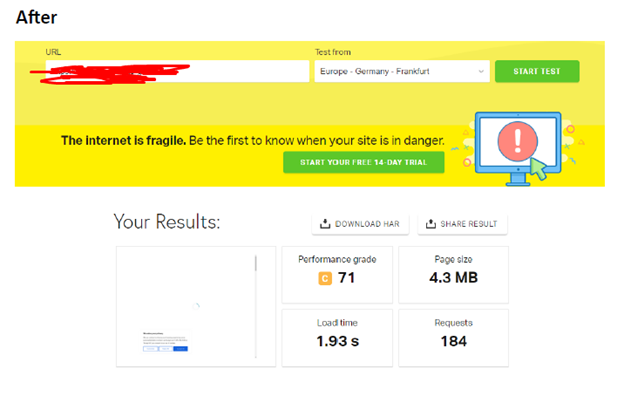


The client operates a Santorini tour guide website catering to travelers planning guided experiences across the island. While the tours themselves were high quality, the website failed to reflect that experience. Slow load times, unreliable hosting, and poor performance during peak traffic periods were causing potential customers to leave before exploring tours or completing bookings.
With most visitors arriving via mobile devices and organic search, speed and reliability were critical. Our goal was to transform the website into a fast, responsive, and trustworthy platform that supported trip planning and encouraged bookings. This project focused on migrating the site to a high-performance hosting environment and optimizing it to meet Google’s Core Web Vitals standards.
Before the hosting migration, the Santorini tour guide website faced several performance issues that directly impacted user experience and revenue.
The core goal was to drastically improve website speed and performance by: Migrating the website to a faster, reliable hosting platform. Reducing page loading times to under 2 seconds. Enhancing site responsiveness, especially for mobile users. Improving user experience to boost engagement and conversion rates. Restoring SEO performance by meeting Google’s Core Web Vitals standards.
1. Initial Performance Audit We began with a comprehensive performance analysis using tools like Google PageSpeed Insights and pingdom. Key findings included: Page Speed: Average load time was 13.5 seconds. Hosting Limitations: Shared hosting couldn’t handle database queries or traffic spikes efficiently. Critical Errors: Poor server response times (TTFB) and unoptimized caching were the main culprits slowing the site. We recommended switching to Other hosting I recommend, a cloud-based hosting platform optimized for WordPress, to resolve these issues.
2. Hosting Migration After finalizing hosting requirements with the client, we began migrating the site to its new environment.
Page Speed Tests: Used GTmetrix and Pingdom to analyze speed improvements. User Testing: Verified that critical actions like bookings, navigation, and form submissions worked flawlessly. Cross-Device Testing: Checked responsiveness across desktop, tablet, and mobile devices. Key results: load times decreased from 13.5 seconds to 1.9 seconds.
Results
Within 1 month after launching the migrated site, Client site experienced dramatic improvements: Lightning-Fast Loading Times: Average page load times reduced from 11.2 seconds to 1.7 seconds, exceeding Google’s recommended speed benchmarks. Reduced Bounce Rates: Bounce rates dropped by 50%, as users were now able to access content quickly. SEO Rankings Boost: Speed improvements positively impacted Google’s Core Web Vitals assessment, leading to a 35% increase in organic traffic over the next 3 months. Higher Conversions: Booking completion rates increased by 80% due to improved user experience and faster interactions.
User Feedback: Customers praised the site’s responsiveness and speed during their interactions. Before vs. After Metric Before Migration After Migration Page Load Time 11.2 seconds 1.7 seconds Bounce Rate 78% 38% Online Booking Conversion Rate 5% 9% Organic Traffic (Monthly) ~300 visits ~405 visits
Key Features Implemented After Hosting Migration Improved Server Response Time: Server response times dropped from 4 seconds to under 0.4 seconds. Global CDN Integration: Faster loading for international users Cloudflare Streamlined Performance Monitoring: Real-time monitoring of website health to ensure speed consistency during peak traffic periods.
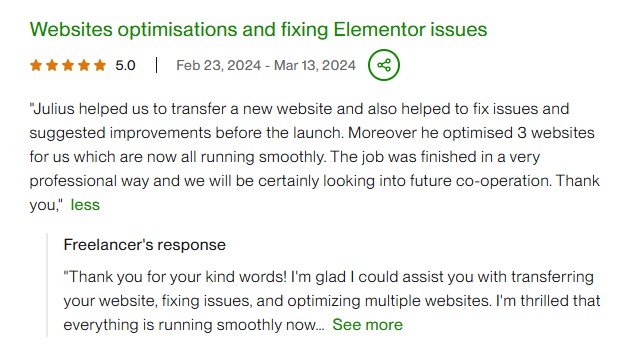
Let’s enhance and grow your online presence through a combination of strategic web design and effective search engine optimization techniques.

Hire me today and GROW your business Tomorrow.
Iligan City
Del Carmen, Iligan City 9200